2 |

|
|
Egyptian Goose German name(s): "Nilgans" Size: 63-73 cm; wing span 1.34-1.54 m Body mass:1.5-2.35 kg Wing loading [g/cm2]: ca. 1.0-1.3 |
 Description  Classification  Distribution  Sightings  Photos  Breeding  Nest  Eggs  Behaviour  Food  Call/s |
 Click here for a physical description
|
|
Photos |
 |
ADULT |
 |
PAIR |

Lateral view of a pair of Egyptian Geese, male on the right
(photo courtesy of J. Pires)
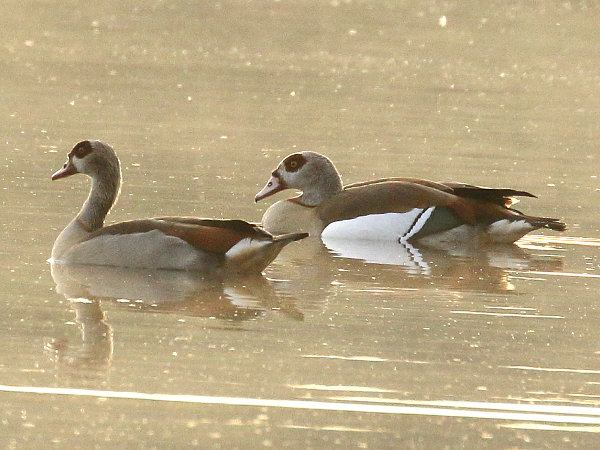
[Albufeira do Peso, Montemor o Novo, Evora, Portugal, April 2019]
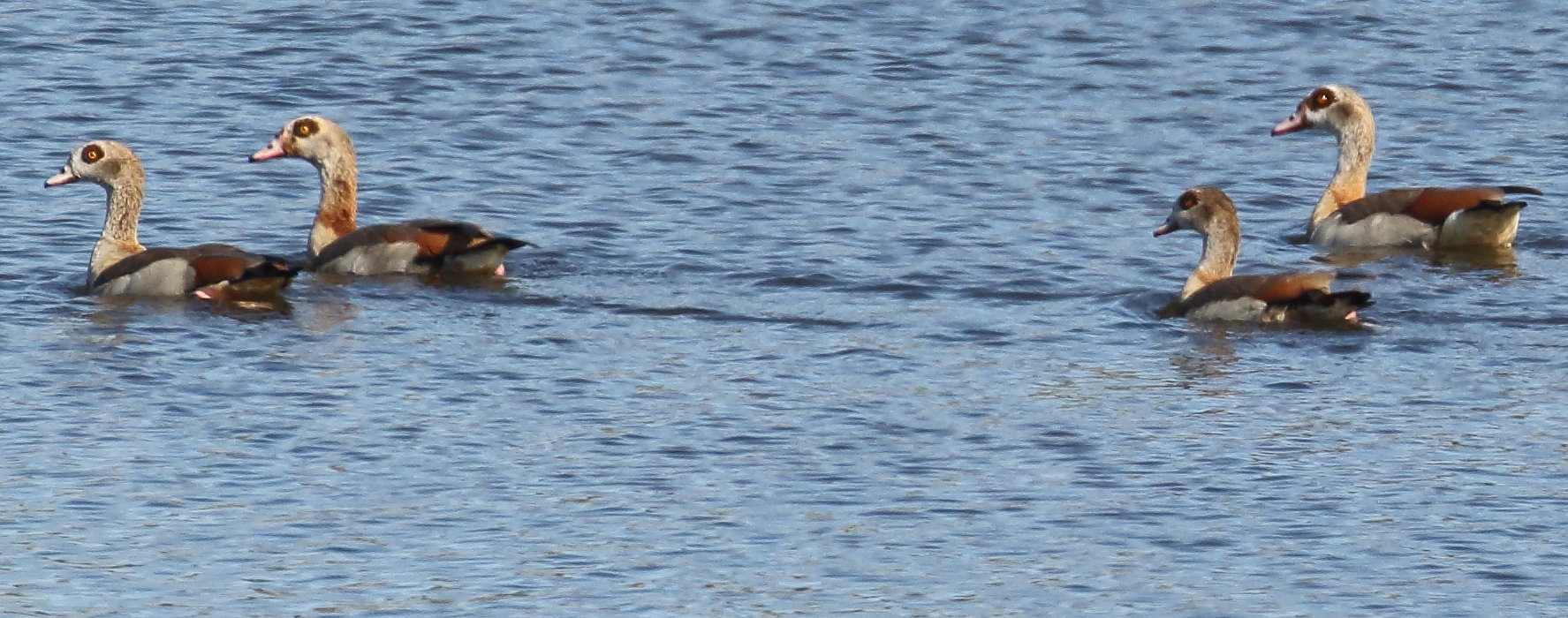
Lateral view of two pairs of Egyptian Geese
(photo courtesy of J. Pires)
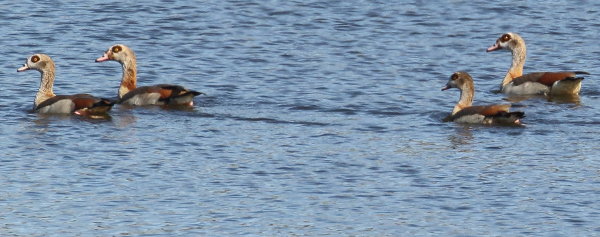
[Mora, Evora, Portugal, October 2019]
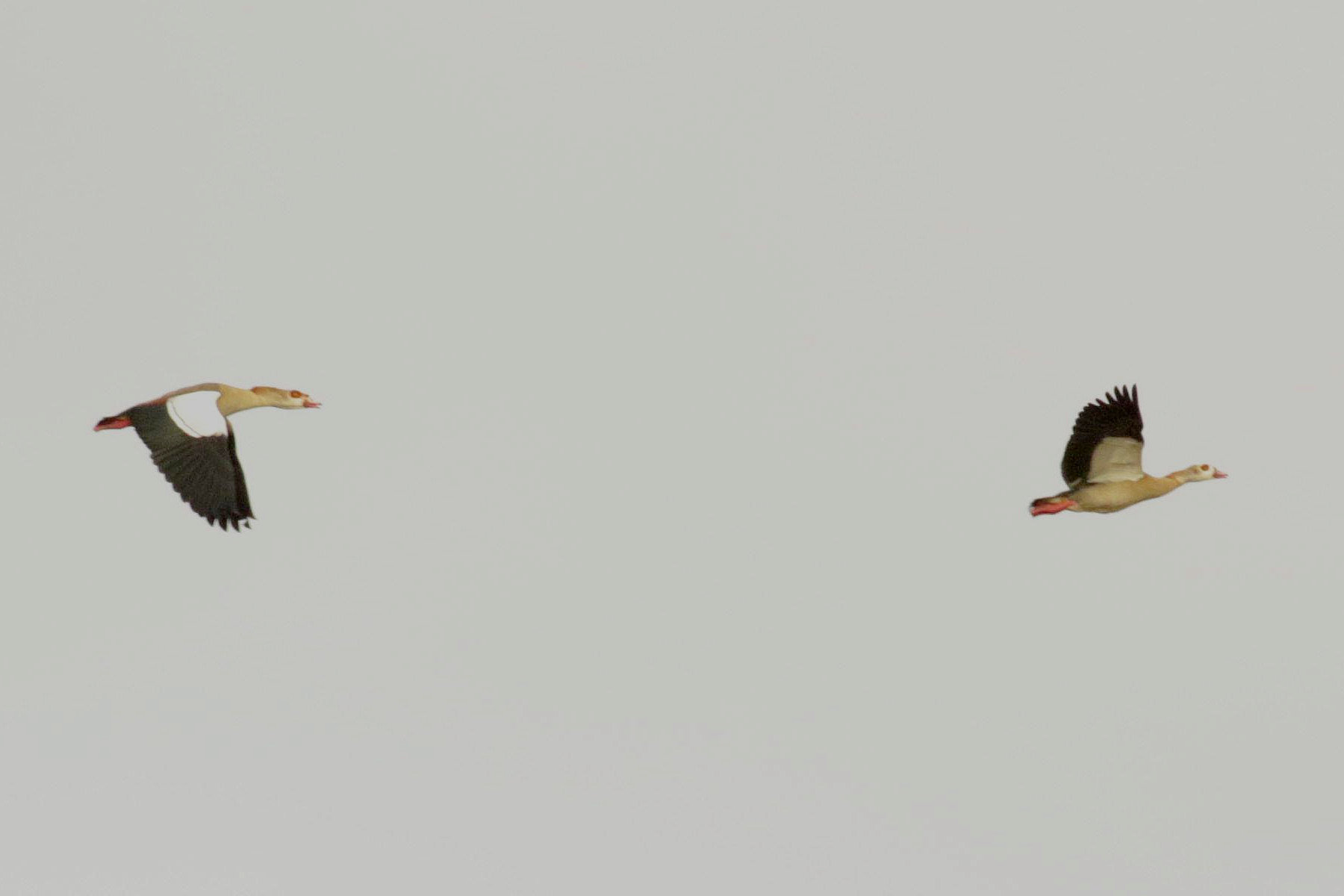
Lateral view of a pair of Egyptian Geese in flight
(photo courtesy of J. Pires)
[Mora, Evora, Portugal, December 2018]
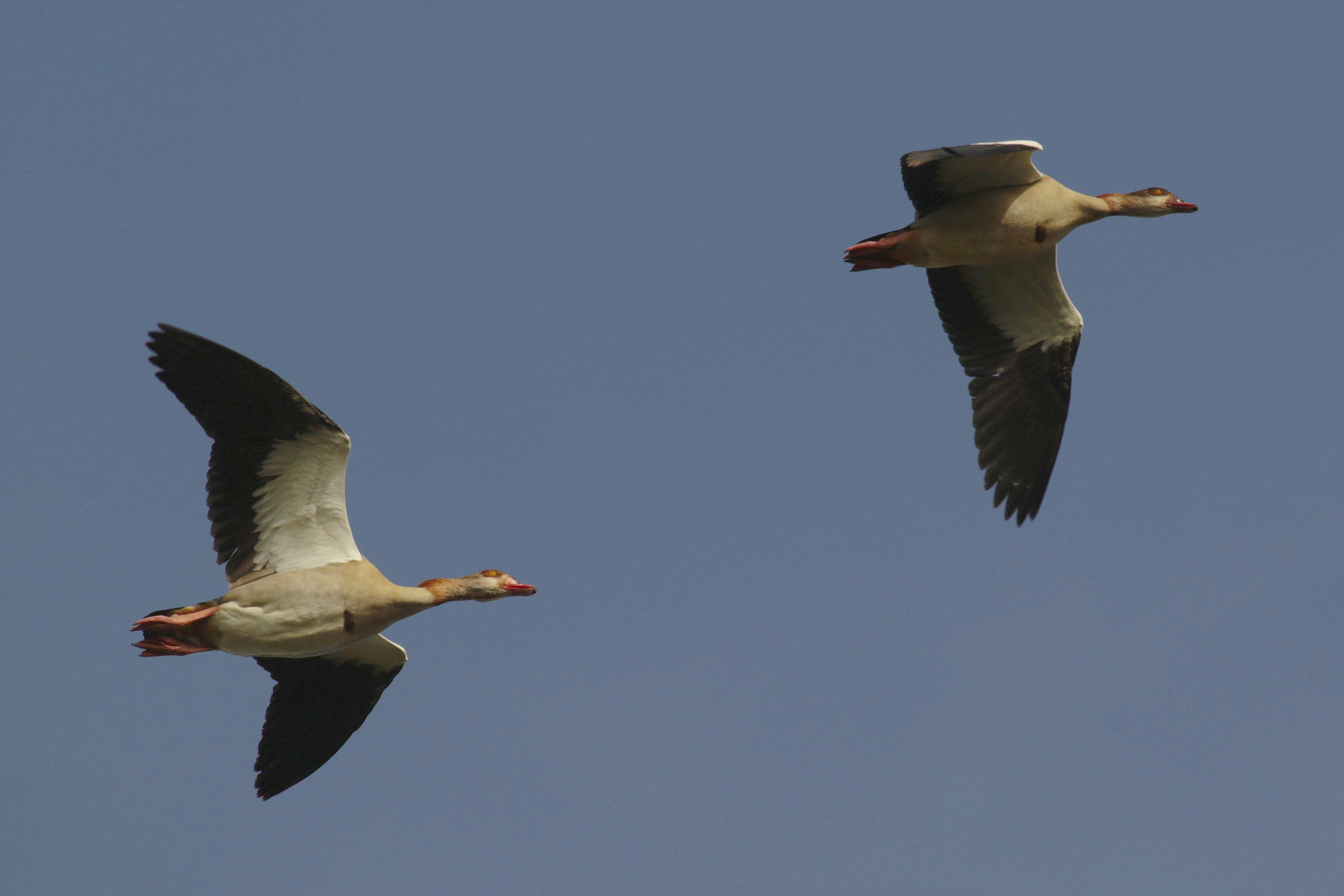
Lateral/ventral view of a pair of Egyptian Geese in flight
(photo courtesy of J. Pires)
[Mora, Evora, Portugal, November 2018]
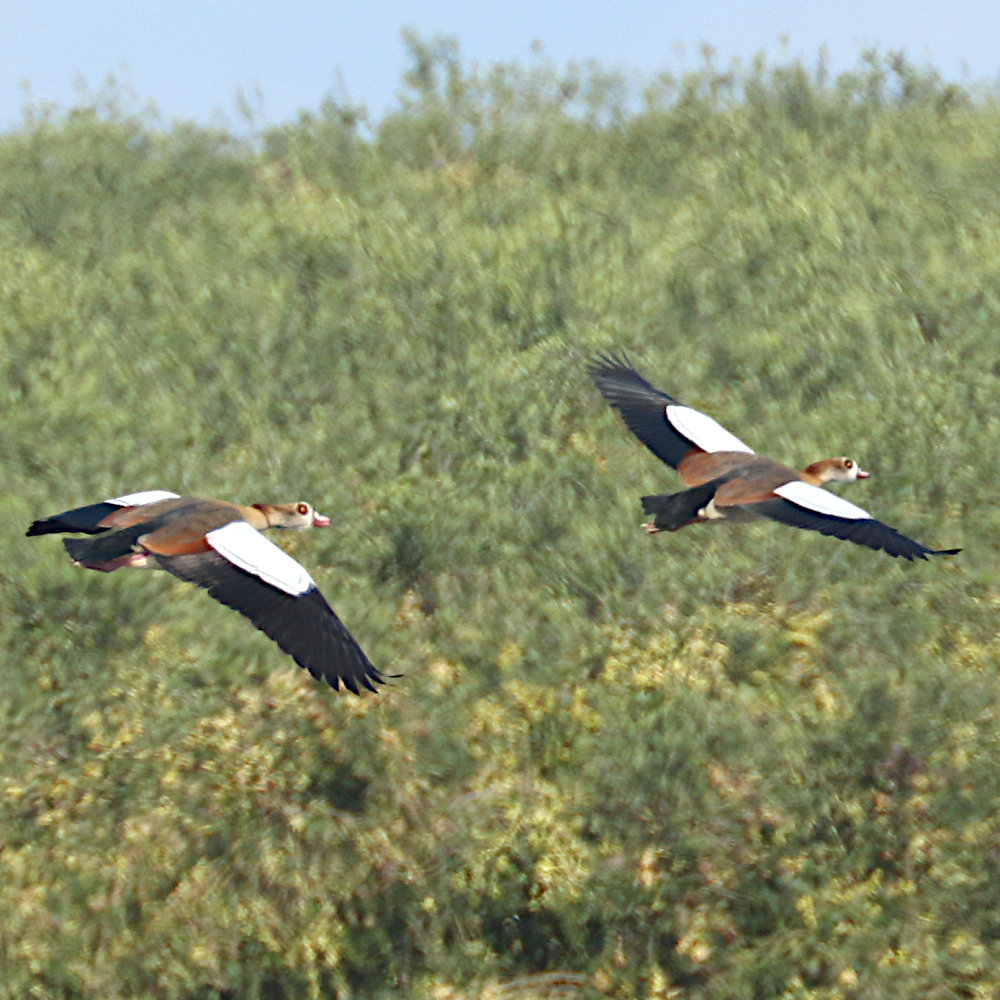
Near-dorsal view of a pair of Egyptian Geese in flight
(photo courtesy of J. Pires)
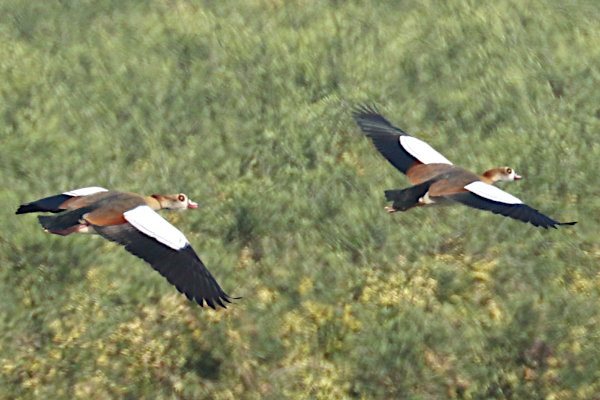
[Lagoa dos Patos, Alvito, Beja, Alentejo, Portugal, November 2021]
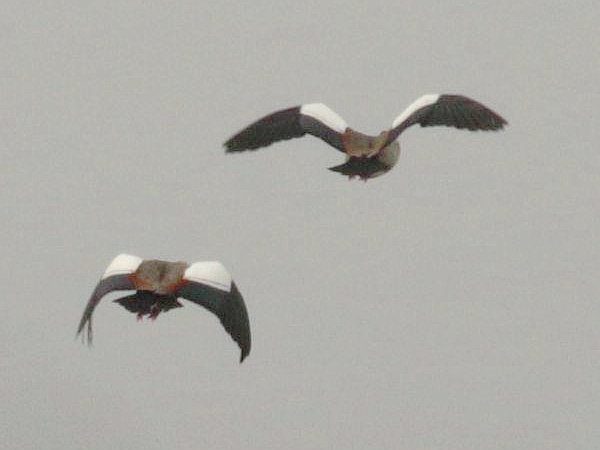
Dorsal view of a pair of Egyptian Geese in flight
(photo courtesy of J. Pires)
[Mora, Evora, Portugal, December 2018]
Sex unknown |
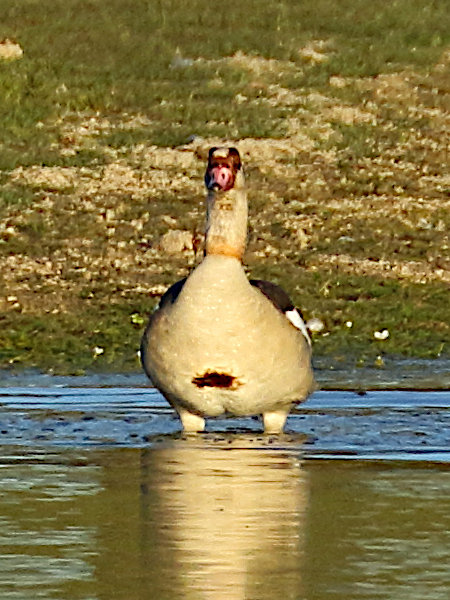
Full-frontal view of an Egyptian Goose
(photo courtesy of J. Pires)
[Charca do Prates, Arraiolos, Evora, Portugal, February 2022]
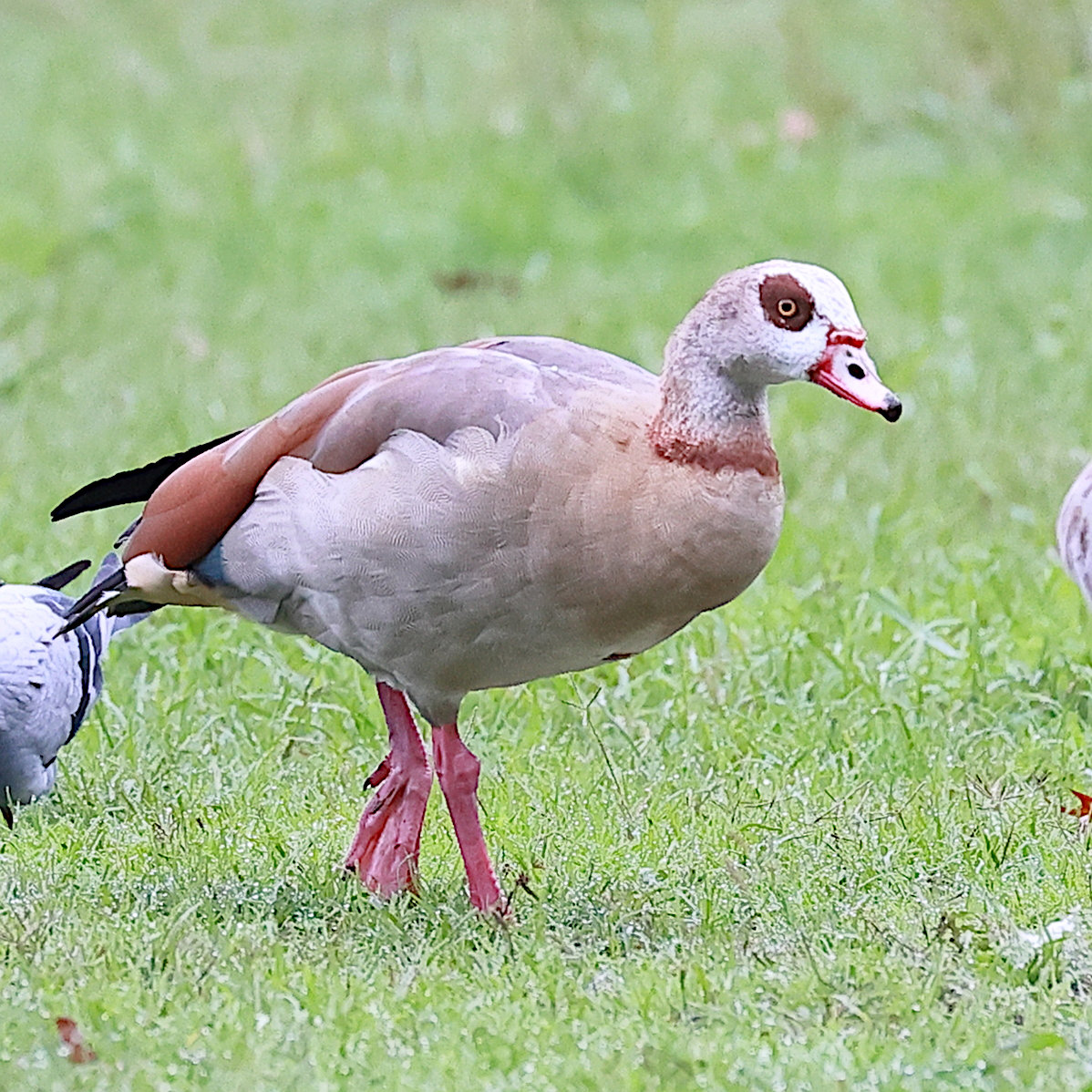
Near-lateral view of an Egyptian Goose
(photo courtesy of J. Pires)
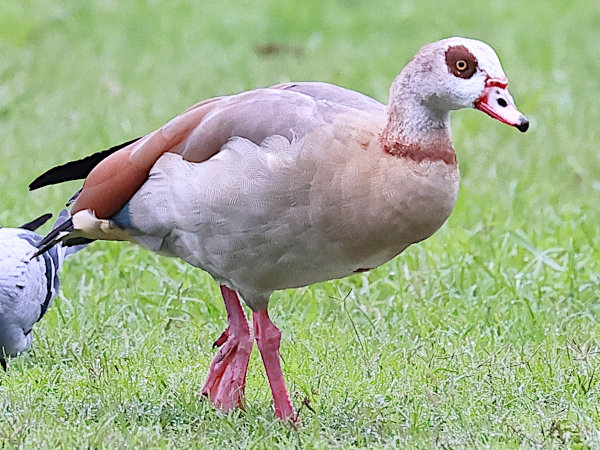
[Parque da Paz, Almada, Setubal, Portugal, November 2022]

Close-up lateral view of a resting Egyptian Goose
(photo courtesy of J. Pires)
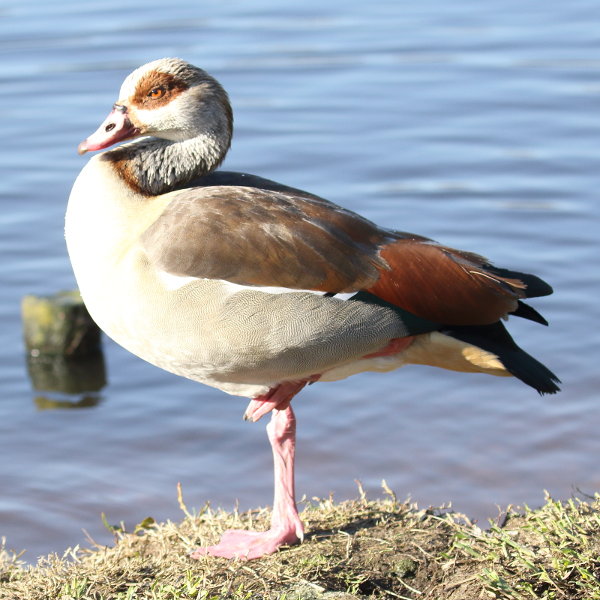
[Parque da Cidade, Porto, Portugal, December 2019]
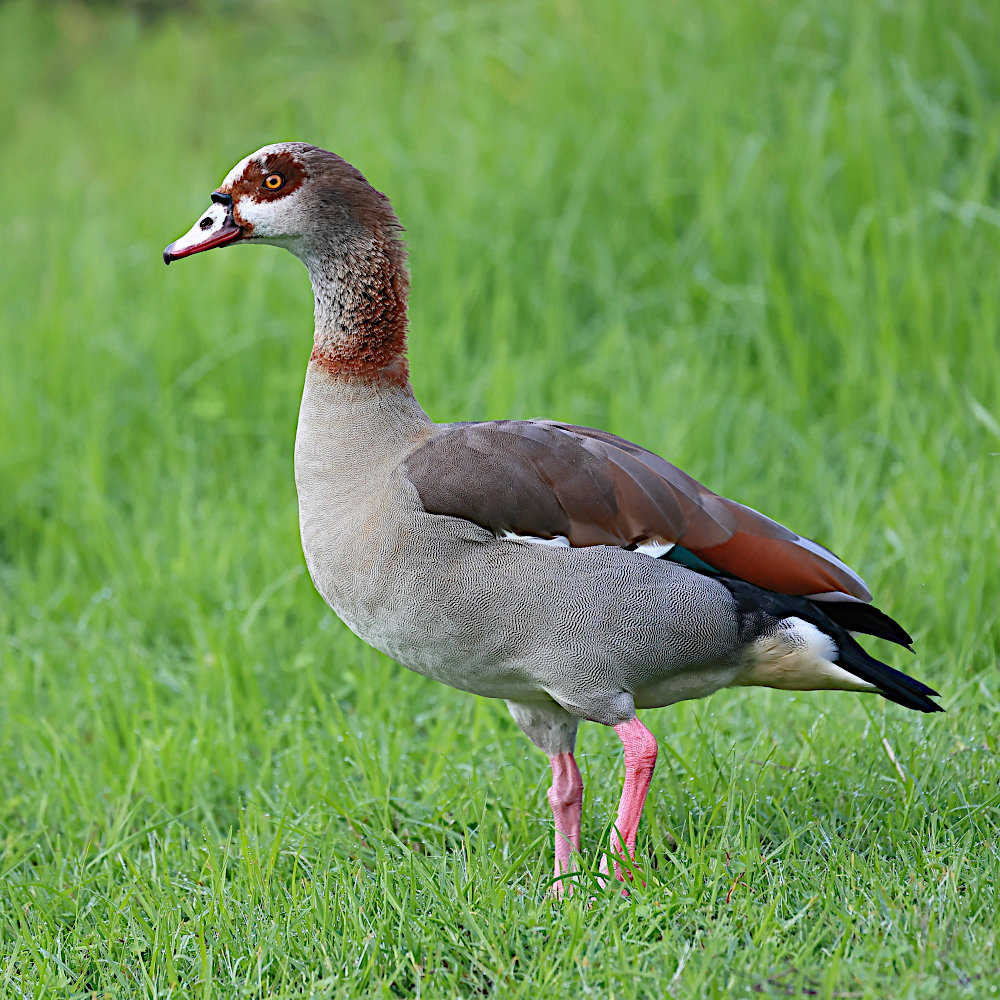
Lateral view of an Egyptian Goose
(photo courtesy of J. Pires)
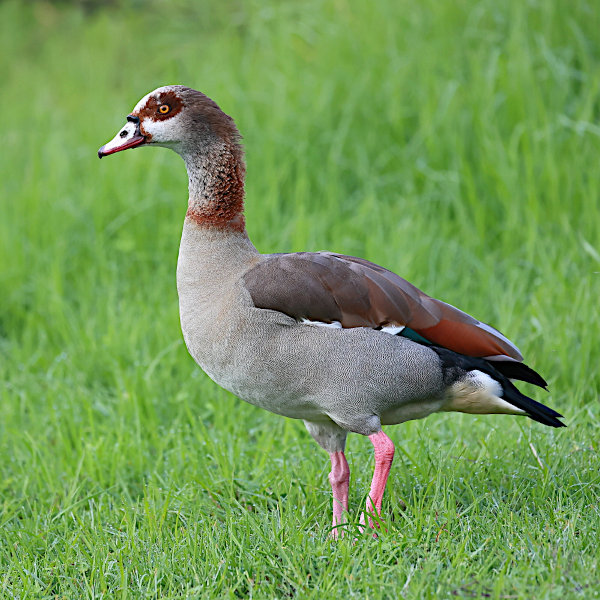
[Parque da Paz, Almada, Setubal, Portugal, November 2022]
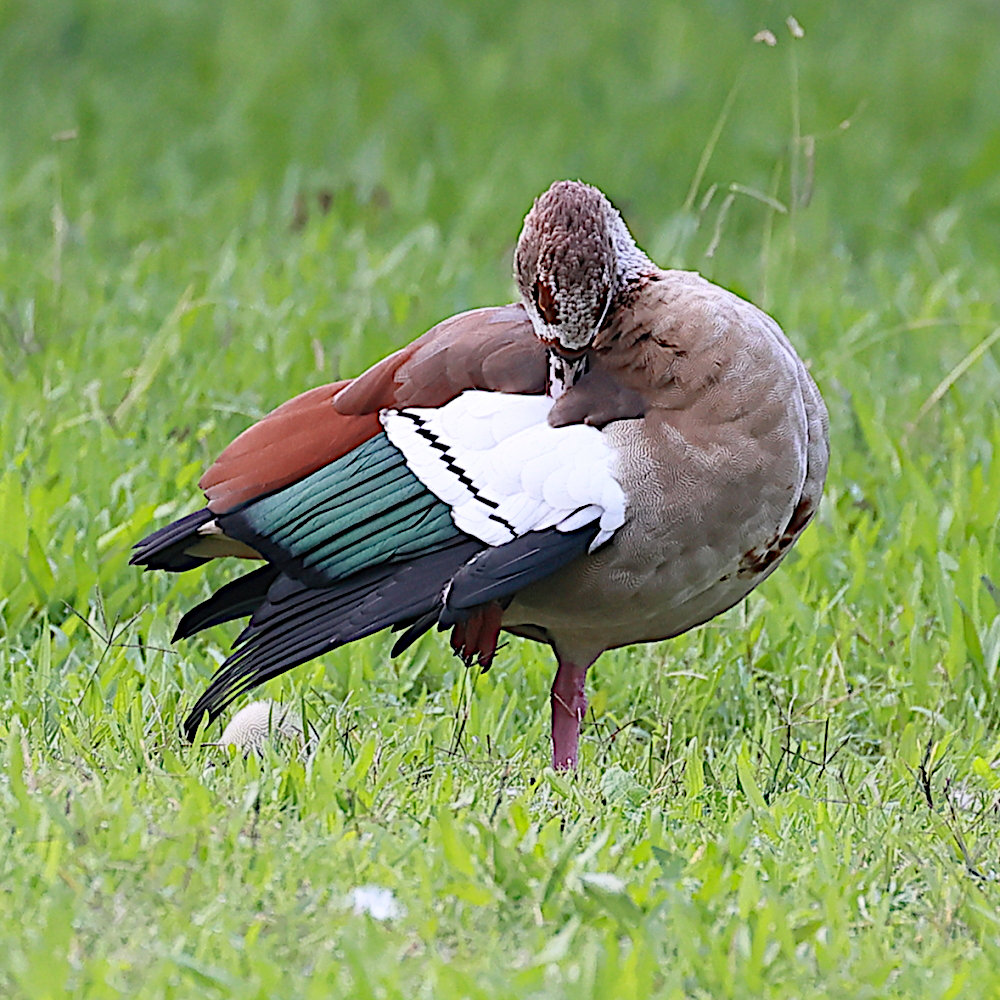
Lateral view of a preening Egyptian Goose showing the colours
of its speculum
(photo courtesy of J. Pires)
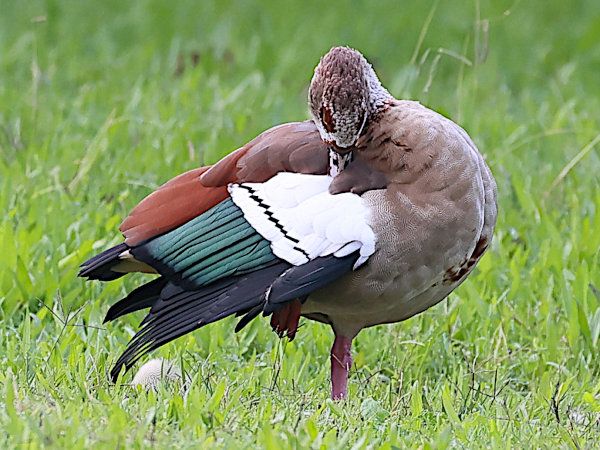
[Parque da Paz, Almada, Setubal, Portugal, November 2022]
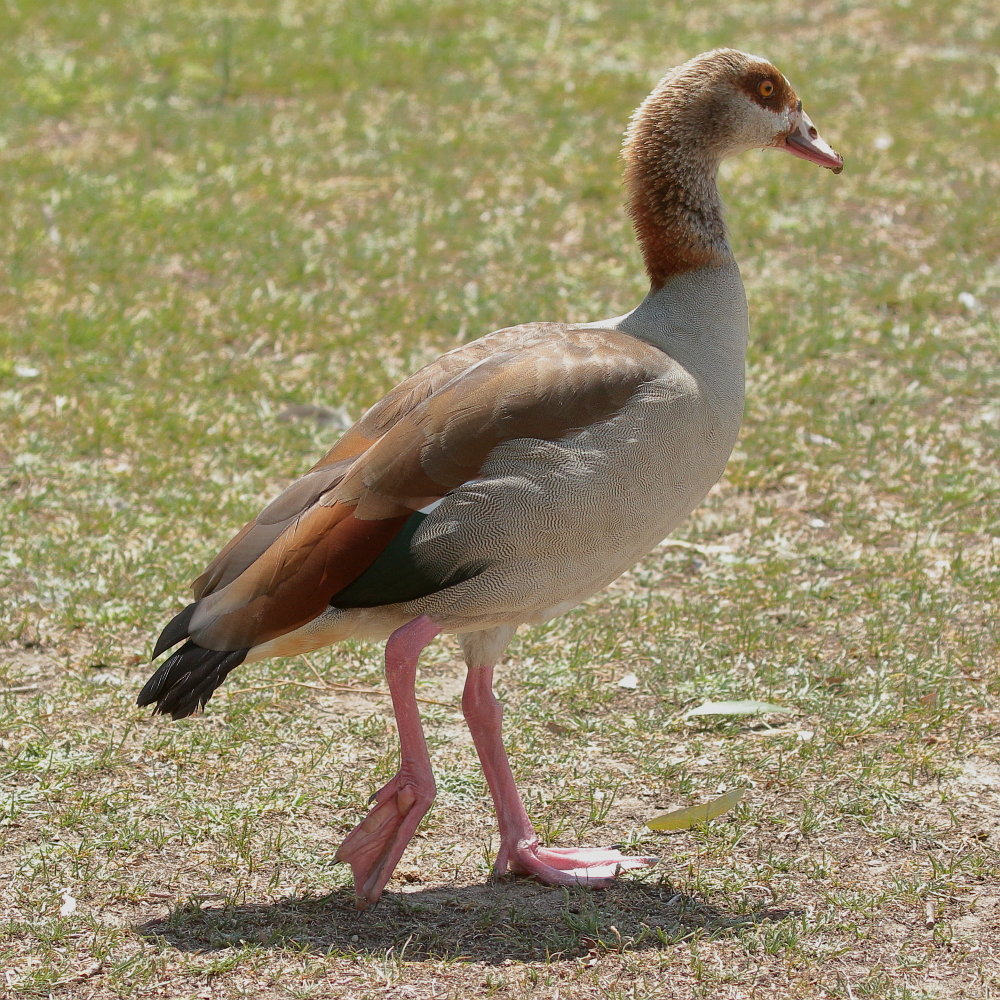
Lateral view of an Egyptian Goose
(photo courtesy of J. Pires)
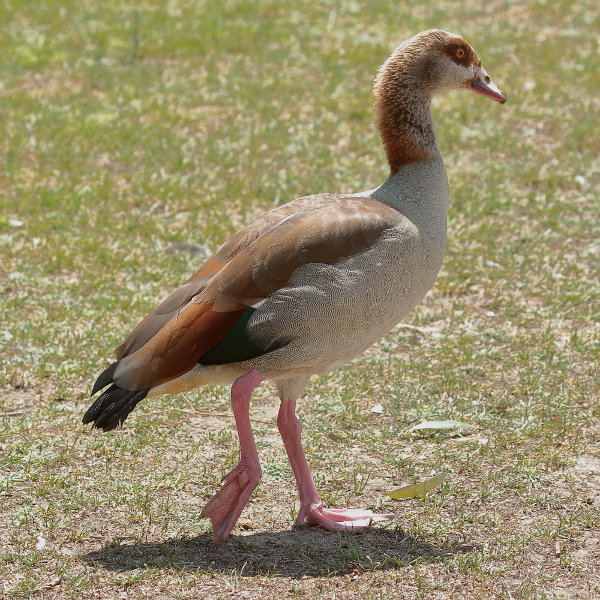
[Parque da Paz, Almada, Setubal, Portugal, July 2019]
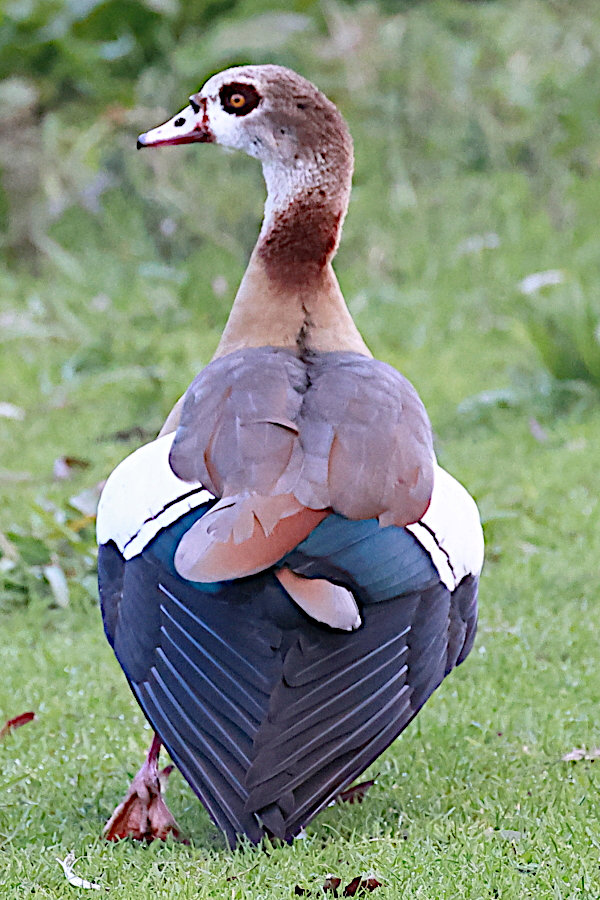
Dorsal view of an Egyptian Goose
(photo courtesy of J. Pires)
[Almada, Setubal, Portugal, January 2023]
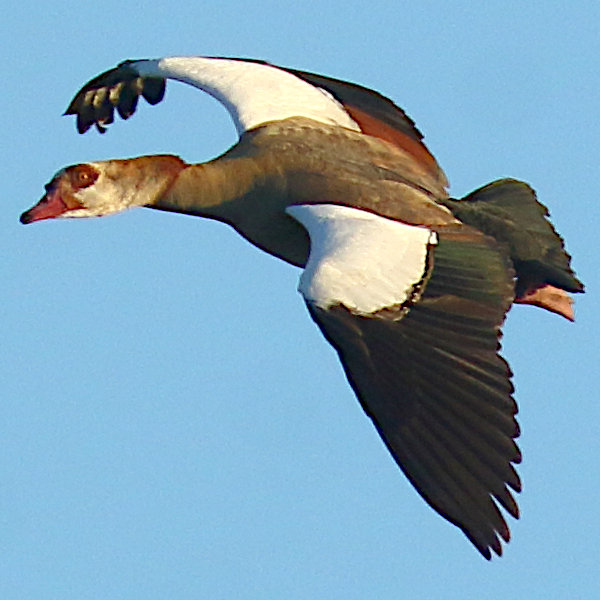
Near-lateral view of an Egyptian Goose in flight
(photo courtesy of J. Pires)
[Charca do Prates, Arraiolos, Evora, Portugal, February 2022]
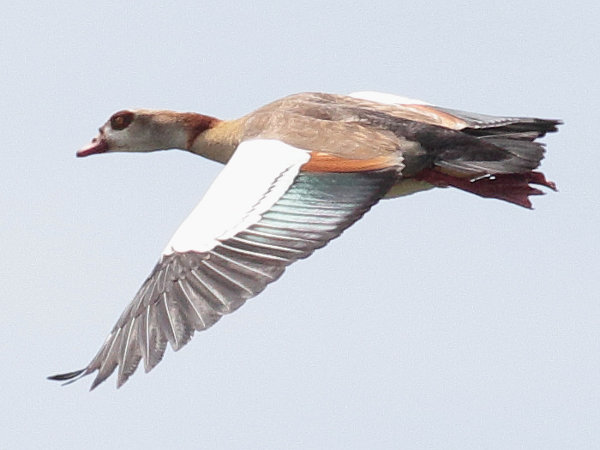
Lateral view of an Egyptian Goose in flight
(photo courtesy of J. Pires)
[Montargil Dam, Ponte de Sor, Evora, Portugal, June 2019]
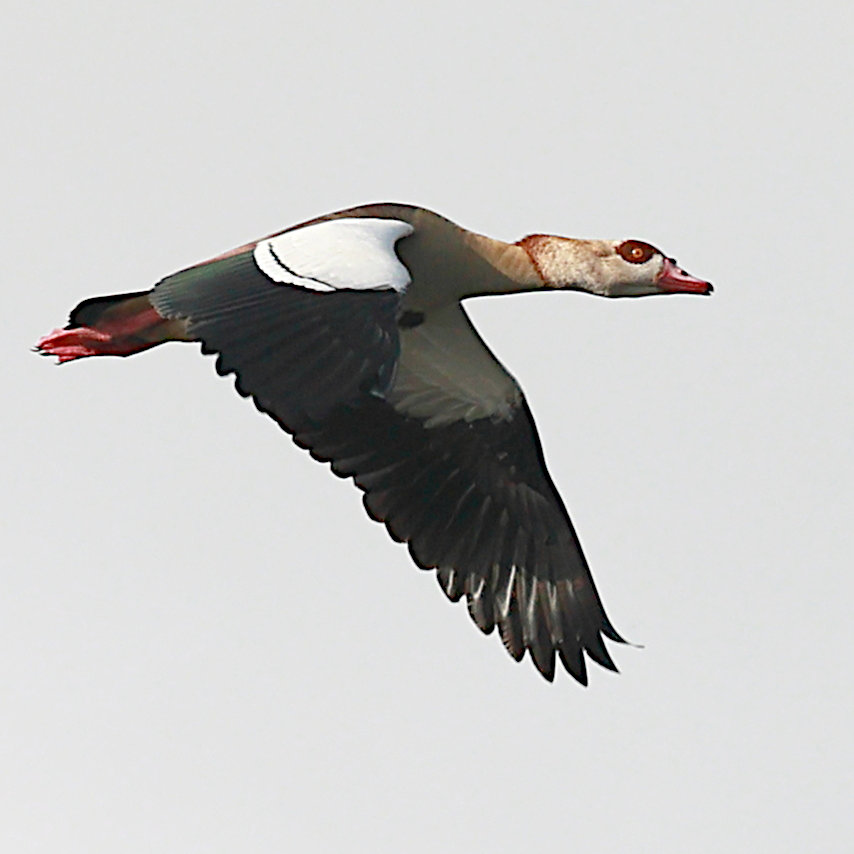
Lateral view of an Egyptian Goose in flight
(photo courtesy of J. Pires)
[Bate Orelhas, Samouco, Tejo estuary, Portugal, January 2023]
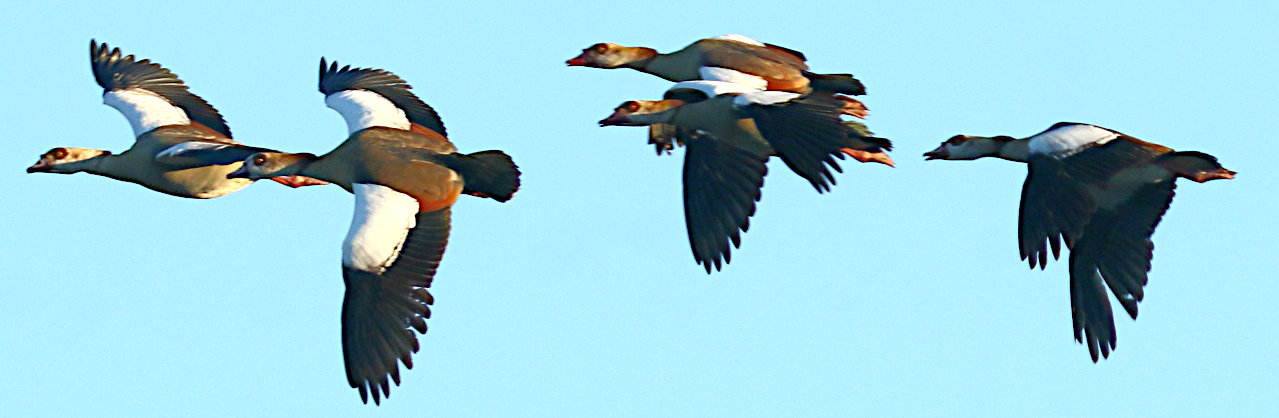
Lateral view of Egyptian Geese in flight
(photo courtesy of J. Pires)
[Charca do Prates, Arraiolos, Evora, Portugal, February 2022]
Lateral view of an Egyptian Goose in flight
(photo courtesy of J. Pires)
[Montargil Dam, Ponte de Sor, Evora, Portugal, June 2019]
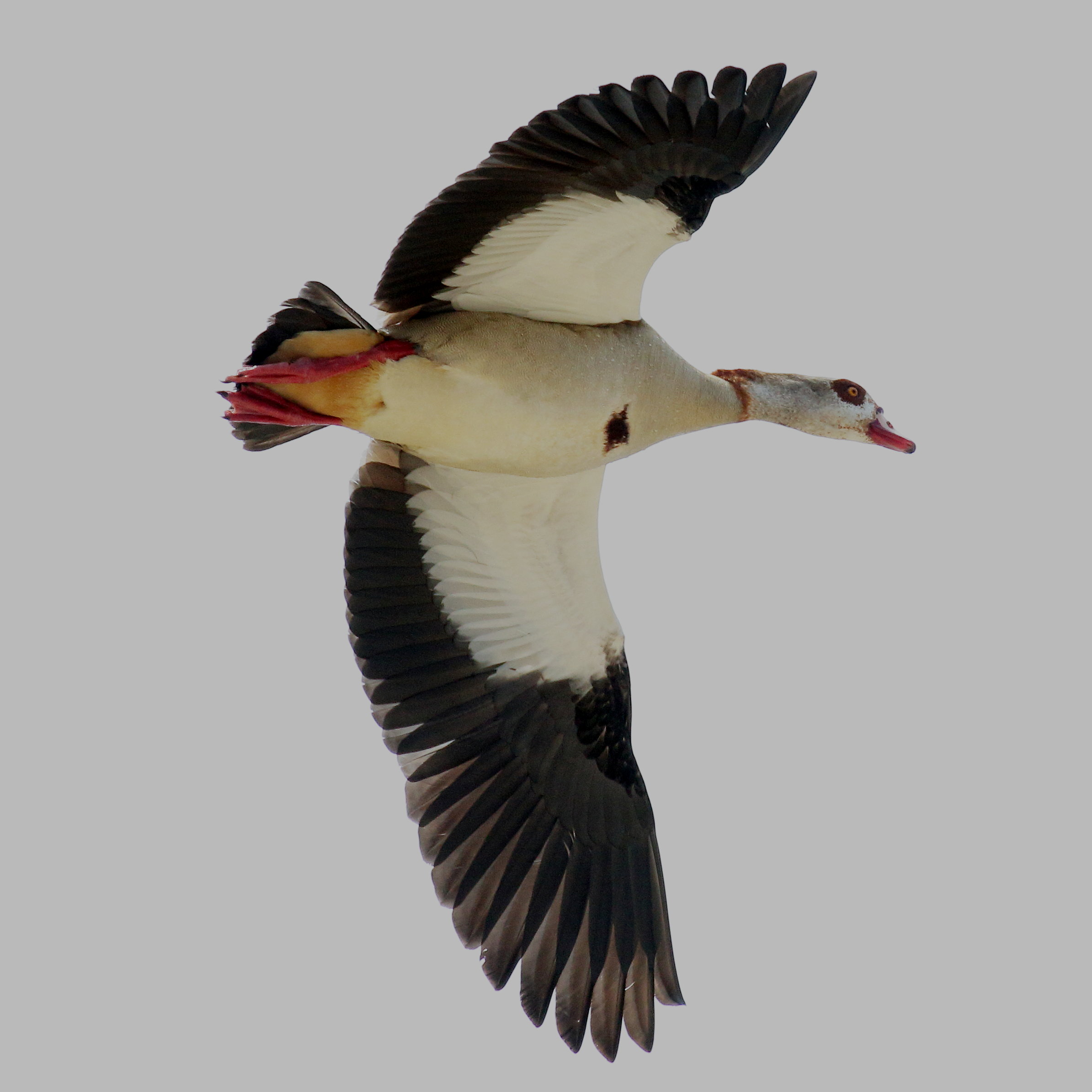
Close-up lateral/ventral view of an Egyptian Goose in flight
(photo courtesy of J. Pires)
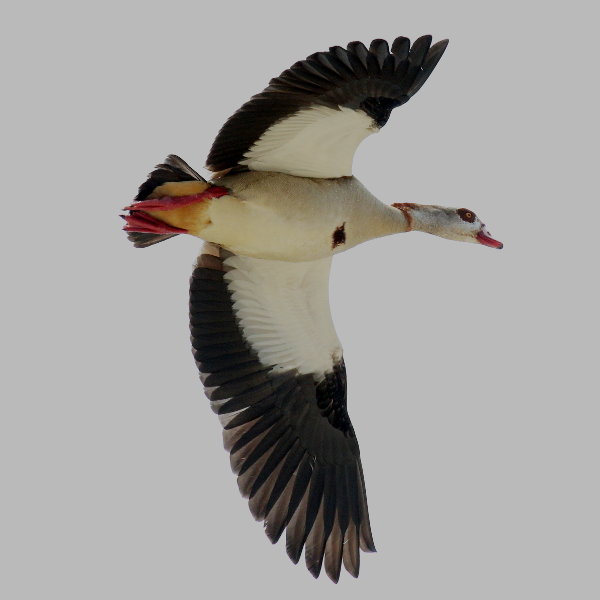
[Montargil Dam, Ponte de Sor, Evora, Portugal, June 2019]
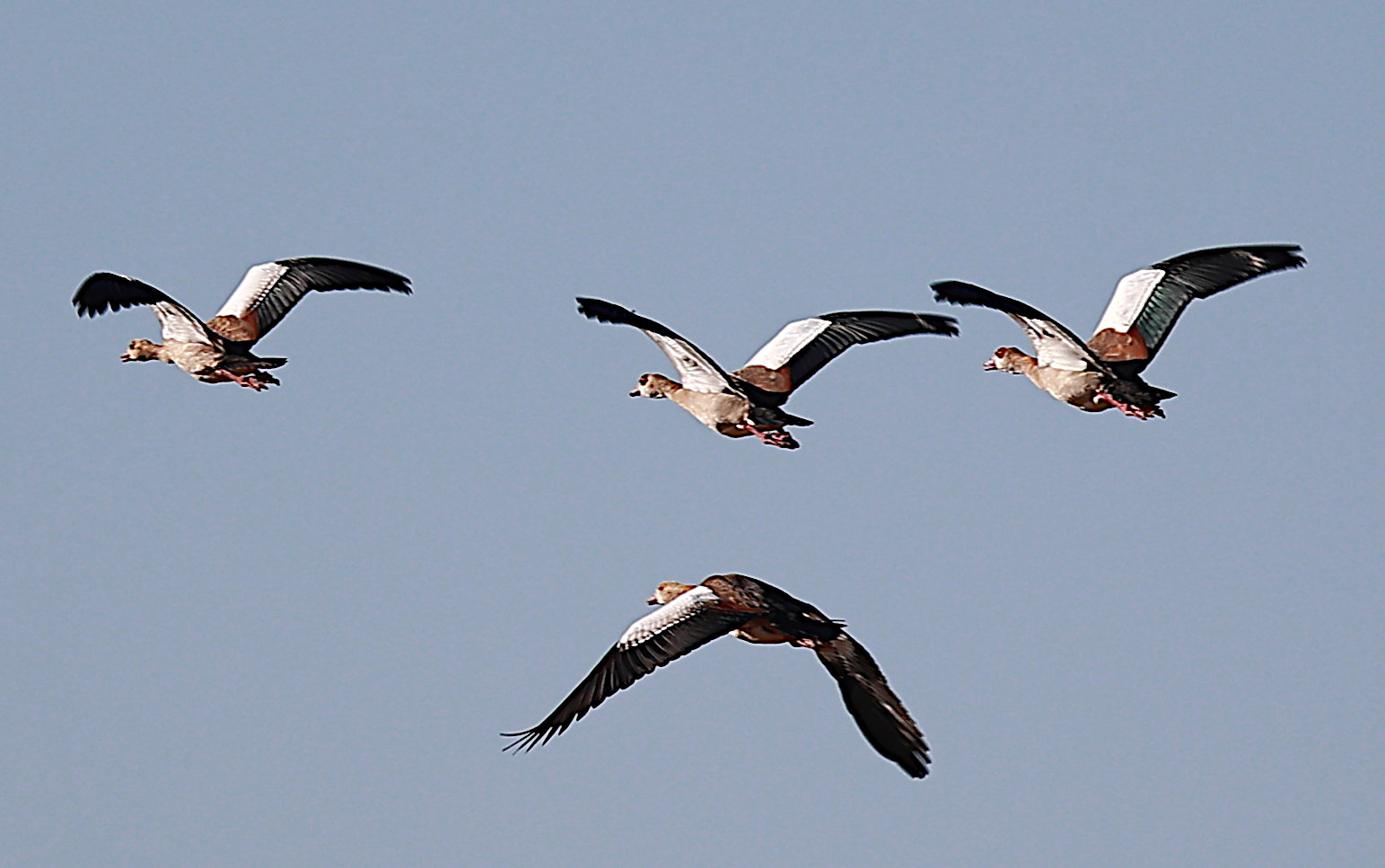
Near-dorsal view of four Egyptian Geese in flight
(photo courtesy of J. Pires)
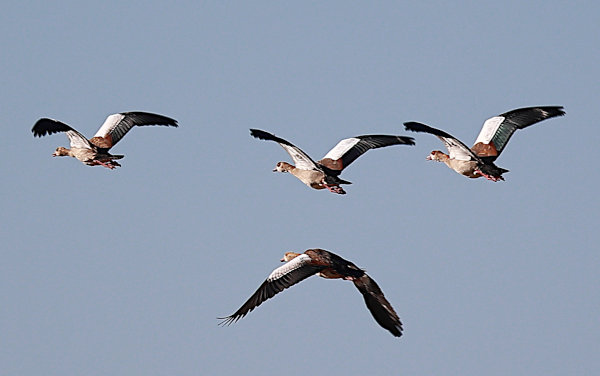
[Herdade de Val Poco, Pavia, Mora, Evora, Portugal, September 2024]
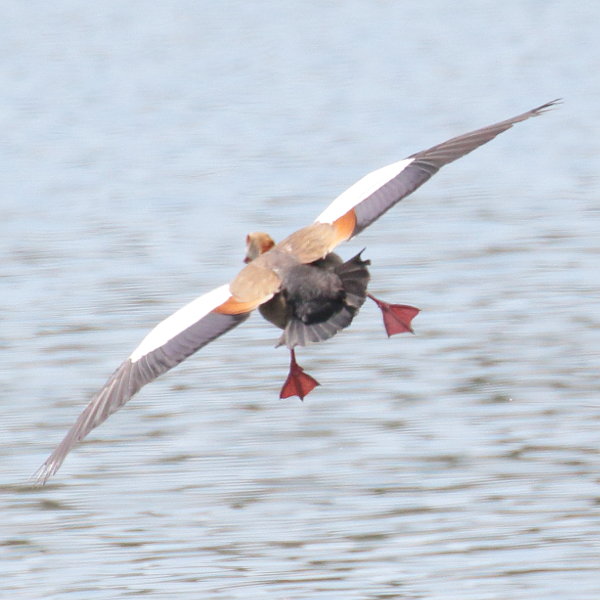
Dorsal view of an Egyptian Goose banking to touch down on water
(photo courtesy of J. Pires)
[Montargil Dam, Ponte de Sor, Evora, Portugal, June 2019]
 |
IMMATURE/JUVENILE |
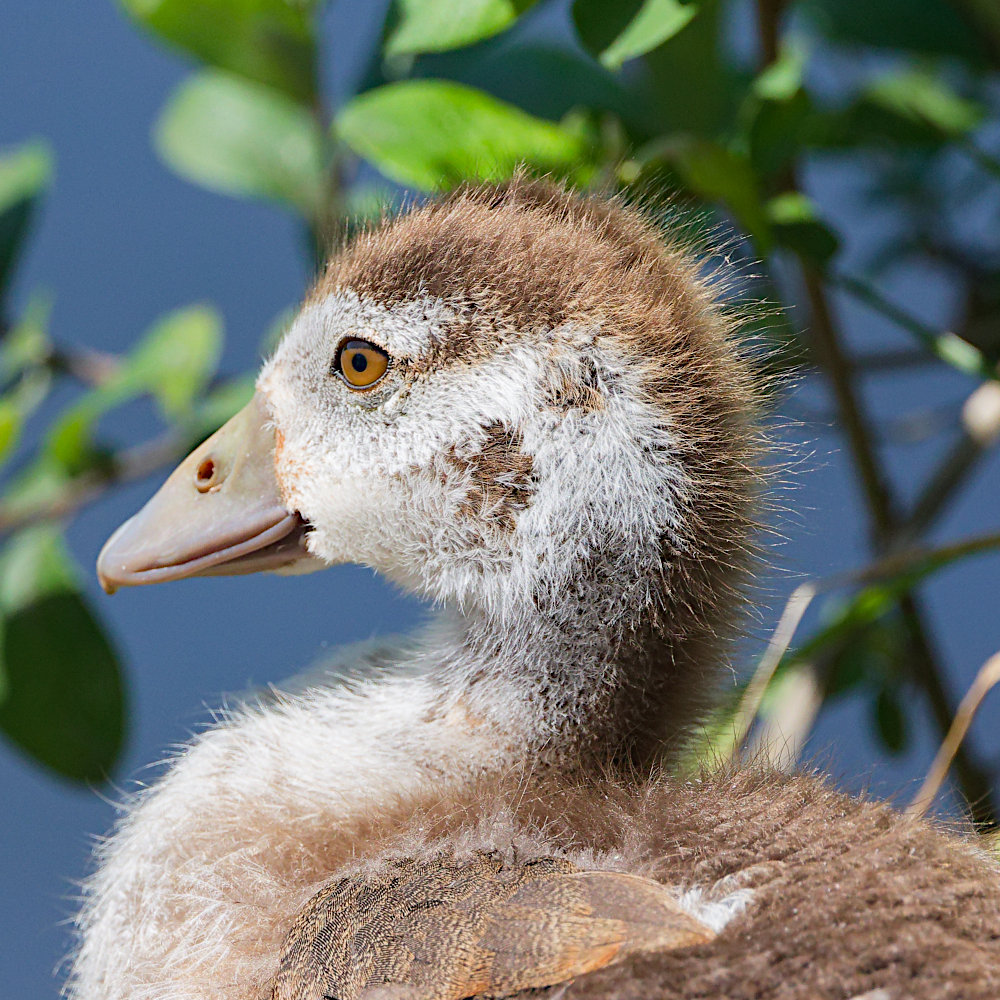
Lateal portrait of a juvenile Egyptian Goose
(photo courtesy of J. Pires)
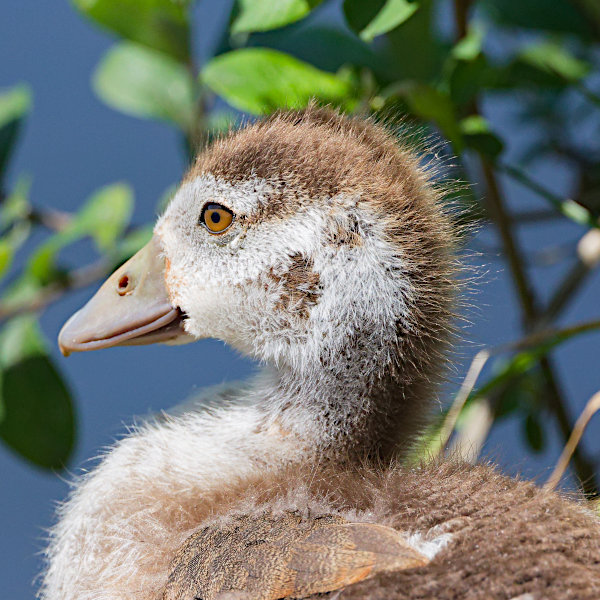
[City Park, Porto, Portugal, April 2025]
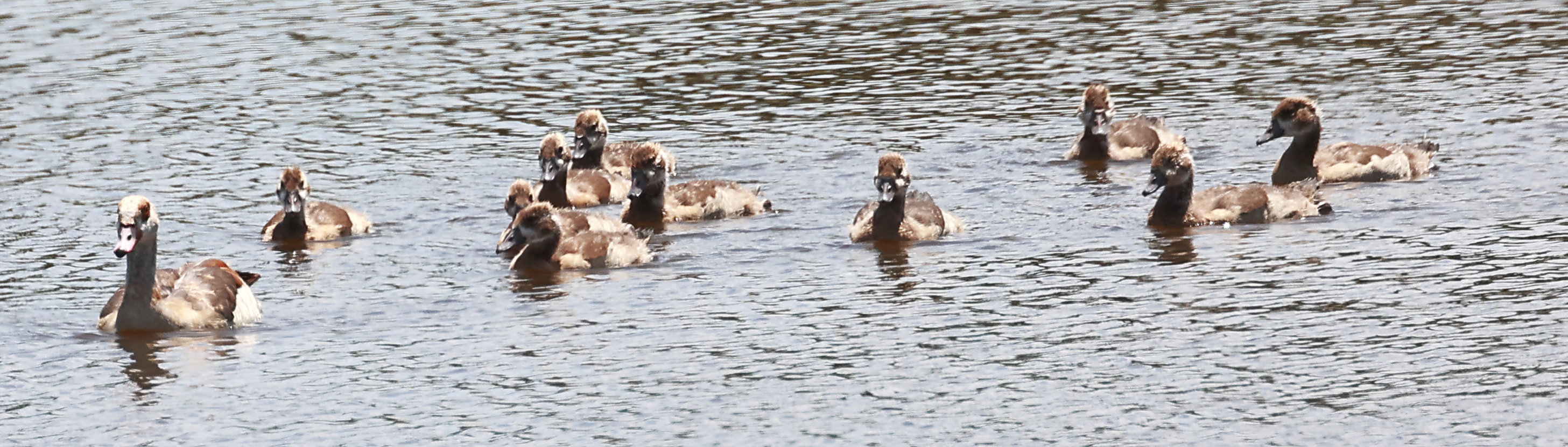
Near-frontal view of an Egyptian Goose with 10 goslings
(photo courtesy of J. Pires)
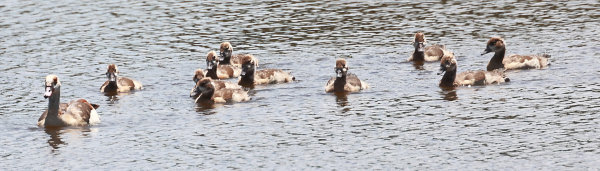
[Herdade de Val Poco, Pavia, Mora, Evora, Portugal, September 2024]
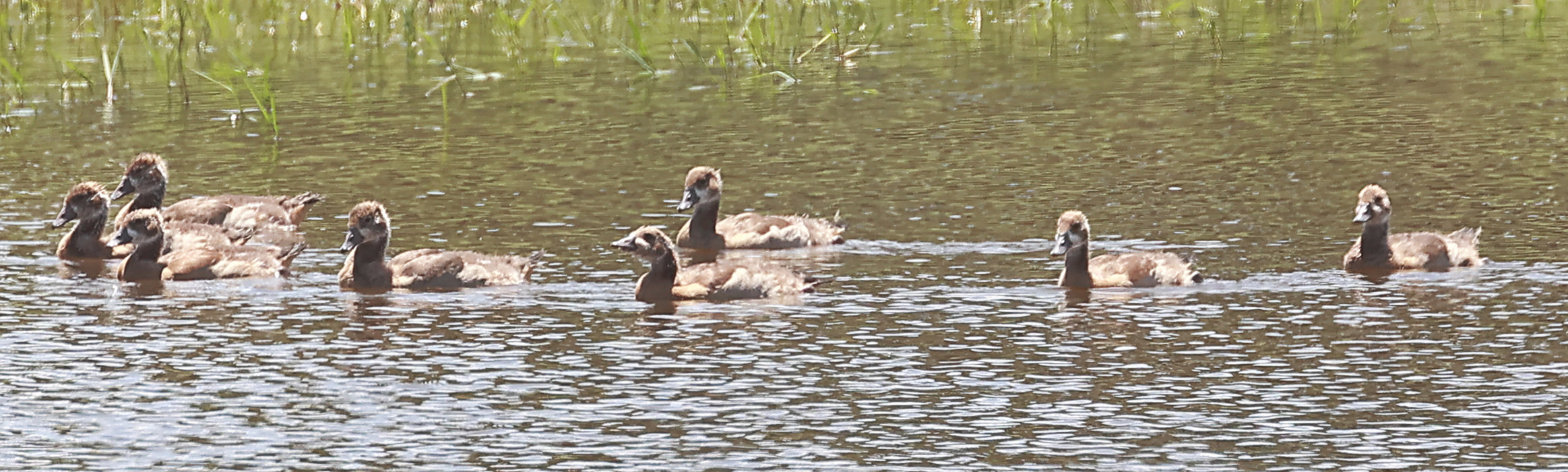
Near-frontal/near-lateral view of 8 Egyptian Goose goslings
(photo courtesy of J. Pires)
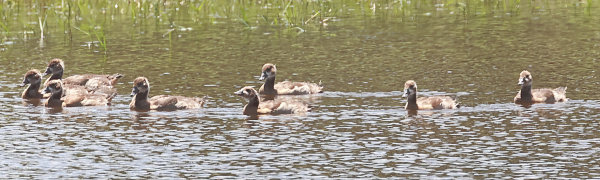
[Herdade de Val Poco, Pavia, Mora, Evora, Portugal, September 2024]
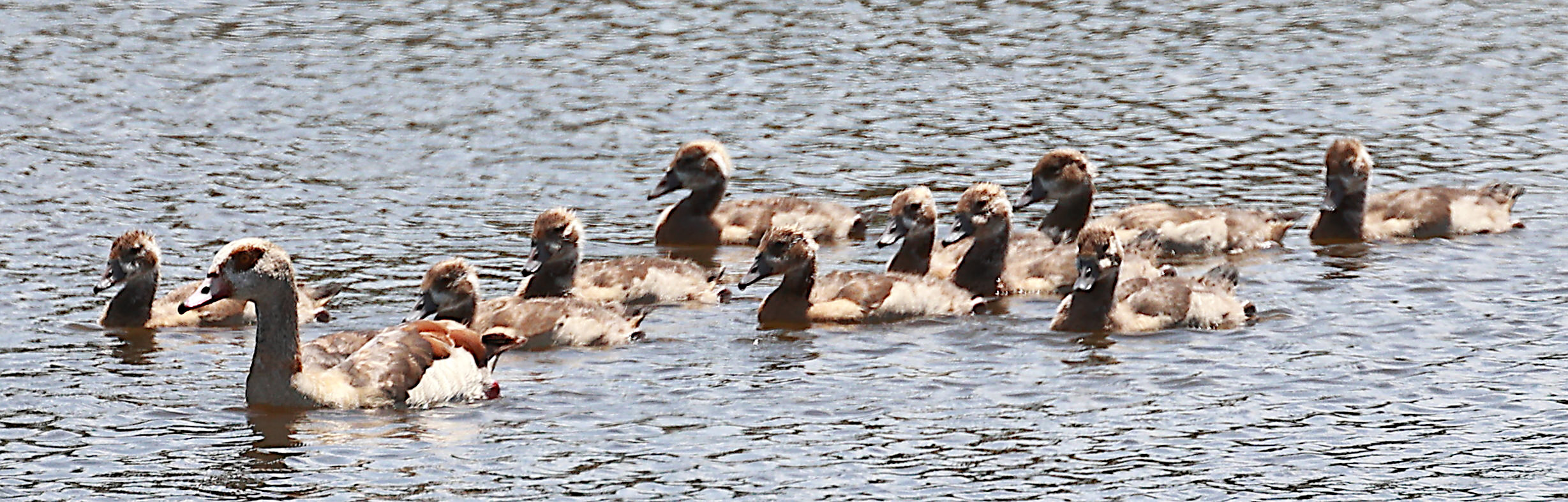
Near-lateral view of an Egyptian Goose with 10 goslings
(photo courtesy of J. Pires)
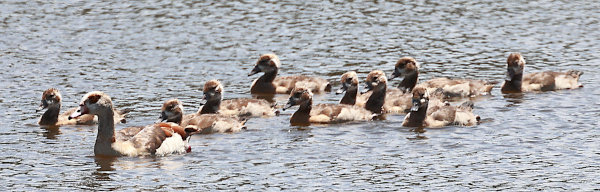
[Herdade de Val Poco, Pavia, Mora, Evora, Portugal, September 2024]
|
|
Behaviour |
| Social behaviour: Communal | Mobility: Sedentary/dispersive | Elementary unit: Pair/covey |
The species was introduced to England in the 17th century, from
where they have not spread far (and not beyond the English Channel).
The continental European population of Egyptian Geese are likely
descendants of introductions in the Netherlands and Belgium in
the 1960ies and 1980ies, from where they have spread rapidly,
mostly along the major rivers, into other countries.
|
|
Call(s)/Song |
For this species we have recorded the following call(s)/song. The
interpretation of their meaning is our own;
comments and suggestions for improvement  are welcome.
| eggoose_jp_20220217_3.mp3 | (Portugal) | Contact calls? (+ sheep & their bells) | © JP | |
| eggoose_jp_20220217.mp3 | (Portugal) | Warning calls? (+ sheep & their bells) | © JP | |
| eggoose_jp_20220217_2.mp3 | (Portugal) | Warning & contact calls? (+ sheep & their bells) | © JP |
More Egyptian Goose sound recordings are available at
xeno-canto.org
 .
These pages are largely based on our own observations and those of our contributors. The structure of these bird pages is explained HERE. For more salient facts on any bird species please refer to a field guide.
|
Would you like to contribute photos or sound recordings to this
site?
If interested, please CLICK HERE. Credits to contributors are given HERE. |
Disclaimer:
Comments are always welcome. We give no guarantee
that the information presented on these pages is always correct or
up-to-date. External links are marked as such and we take no
responsibility for the contents of external pages.
All images on this site are protected by copyright & used by permission
of the respective owners. If you wish to reproduce them or any of the
material presented on this website, please contact us:
We hereby acknowledge the original custodians of the land which is
described on these pages, including the Gomeroi/Gamilaraay people
of the North-west Slopes and Plains of NSW, and the traditional
owners of other lands and nations within this country. We acknowledge
elders past, present and emerging. Sovereignty was never ceded.
Last updated:
Sat, 29 August 2026, 8:23 +00:00